
Understanding the material
Liquid sorbitol is supplied in different compositions, including crystallising and non-crystallising grades. The name “70%” must be read with the specification: total dry substance and D-sorbitol assay describe different properties. Selecting the right grade involves the concentration basis, related polyols, crystallisation behaviour and intended application—not just the product name.
Product Identity & Specifications
Chemical identity, physical characteristics and key specifications for Sorbitol Solution 70%.
| Parameter | Description / value | Basis / application |
|---|---|---|
| Material | Aqueous sorbitol / polyol solution | Liquid excipient |
| Common synonym | D-glucitol solution | Sorbitol is a sugar alcohol |
| Sorbitol CAS number | 50-70-4 | Identity of the D-sorbitol component |
| Sorbitol formula | C₆H₁₄O₆ | Solute; the solution also contains water |
| Sorbitol molecular weight | 182.17 g/mol | D-sorbitol component |
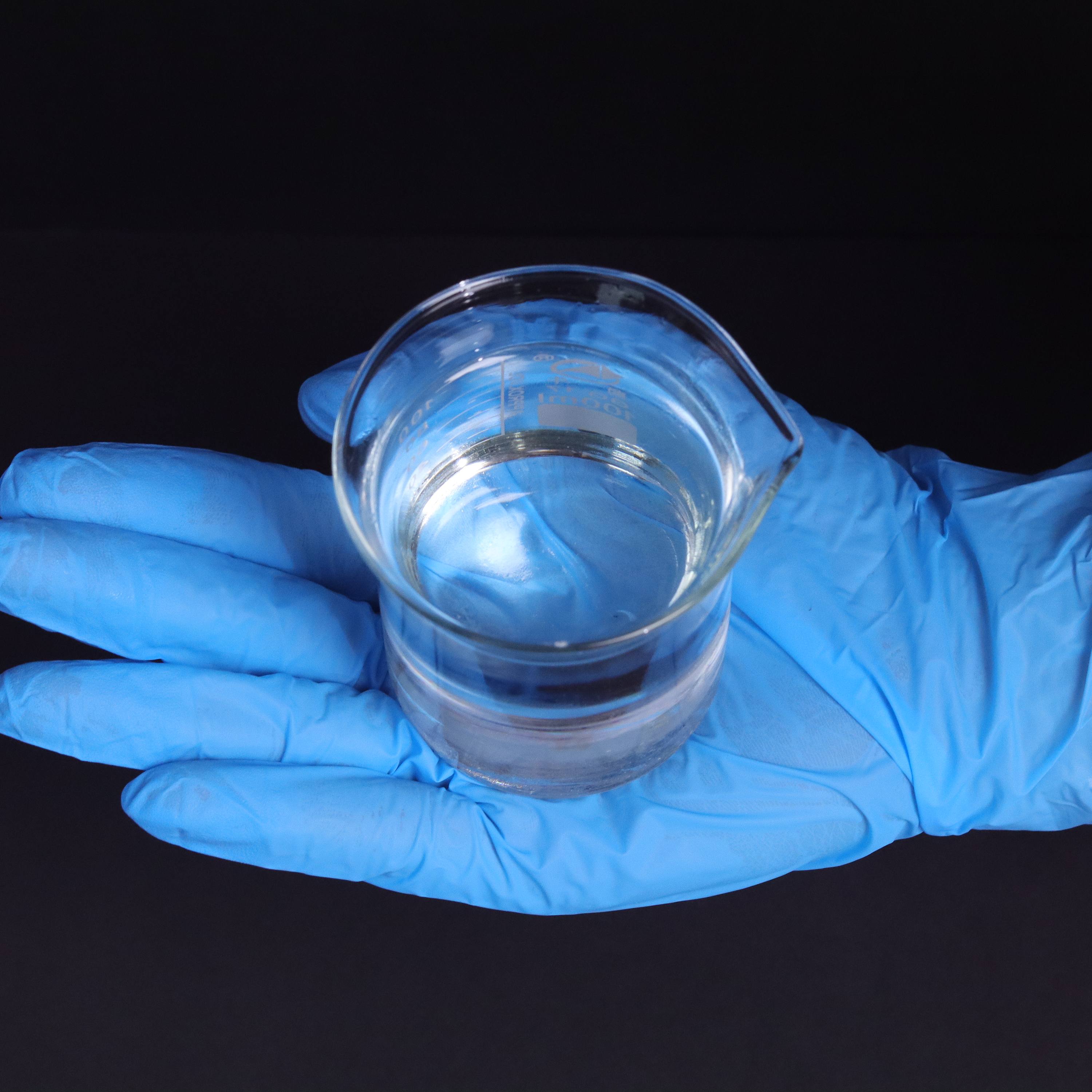
| Appearance | Clear, colourless, syrupy liquid | General liquid-sorbitol description |
| Nominal concentration | 70% product designation | Confirm dry-substance or assay basis on the offered specification |
| USP Sorbitol Solution definition | At least 64.0% D-sorbitol | Not interchangeable with 70% total solids |
| Grade type | Crystallising or non-crystallising | Composition and application dependent |
| Water compatibility | Mixes with water | Check compatibility in the complete formulation |
| Density / viscosity | Reported with test temperature | Use the offered grade’s specification |
| Purity controls | Related polyols, sugars, EG/DEG and microbial quality | Limits follow the selected pharmaceutical specification |
Identity and published standard
USP–NF: Sorbitol Solution
The published definition specifies an aqueous solution containing at least 64.0% D-sorbitol. Other sugars and polyhydric alcohols may be present. The 70% product designation and its concentration basis must be read separately in the offered specification.
View published monographA published standard describes the material; conformity of the offered grade is confirmed through its current specification and COA.
For further information and current COA/specification, please contact us.
Request current COA & specificationApplications & functional benefits
Oral liquid formulations
Provides bulk sweetness and a liquid vehicle in suitable syrups and suspensions. Product development should assess taste, dissolved solids, viscosity and compatibility with the active and other excipients.
Creams, pastes and semisolids
Functions as a humectant to support moisture retention. The selected concentration contributes to the water phase and must be included in the formulation’s total water and solids balance.
Softgel and other specialist systems
Certain non-crystallising liquid-polyol grades are used in softgel plasticiser systems. This application requires a grade selected for the gelatin system; the generic 70% name does not identify that grade.
Understanding the concentration and grade
| Term | What it describes | Why it matters |
|---|---|---|
| Total solids / dry substance | All dissolved non-water material | Can include D-sorbitol plus other polyols or sugars. |
| D-sorbitol assay | The amount of the specific sorbitol component | Check whether the result is on solution or dry-substance basis. |
| Crystallising grade | A liquid grade with its own crystallisation characteristics | Select against the finished product and storage conditions. |
| Non-crystallising grade | A formulation of polyols selected for reduced crystallisation | Do not assume it has the same D-sorbitol concentration as another grade. |
Formulation & processing
Balance the formulation water
The liquid ingredient contributes both dissolved solids and water. Use the stated composition when replacing a powder or changing the liquid grade so that the batch water balance remains correct.
Specify transfer conditions
Viscosity and density data need their measurement temperature. Use the relevant values when discussing pumping, mixing, weighing or volume-based transfer with the production team.
Manage cleanliness and compatibility
Use clean, compatible transfer equipment and keep opened containers protected. Assess microbiological quality and preservation in the finished formulation rather than assuming the raw solution makes the whole product self-preserving.
What to check in the specification
- D-sorbitol assay and total solids: retain the test method and reporting basis for each.
- Related polyols and reducing sugars: review the composition relevant to the formulation.
- Ethylene glycol and diethylene glycol: obtain applicable impurity-control evidence for pharmaceutical use.
- Microbial limits: agree requirements appropriate to the intended formulation and handling.
- Viscosity, colour and crystallisation behaviour: evaluate the offered grade under its stated test conditions.
Current product documentation
Request the current COA, full specification, SDS and concentration/solids information. For pharmaceutical use, include the required microbial and EG/DEG documentation in your enquiry.
Request documents for Sorbitol Solution 70%Packing, storage & handling
Packing and quotation details
Include the required delivery quantity and preferred drum or bulk-container arrangement in your enquiry. SBS will confirm the offered container, net weight, manufacturer, origin and delivery terms. Ask for a sample if viscosity or crystallisation behaviour needs to be assessed before purchase.
Storage and safe handling
Keep containers closed and prevent contamination during sampling and transfer. Follow the manufacturer’s storage-temperature and shelf-life instructions. If crystallisation or a change in appearance occurs, seek the supplier’s handling guidance before applying heat or returning the material to use.
Frequently asked questions
Does 70% always mean 70% pure D-sorbitol?
No. A grade may express the designation in terms of total solids. Check the D-sorbitol assay and its reporting basis separately.
Can any liquid sorbitol be used in softgel capsules?
No. Softgel systems need a suitable plasticiser grade and formulation qualification. Tell SBS that the intended application is softgel manufacture.
Which documents are most useful for pharmaceutical use?
Request the batch COA, full specification, SDS, concentration details, applicable EG/DEG controls and microbial results. State the required pharmacopoeial grade.
Technical information sources
Need more information?
Contact SBS for further product details, current COA, specification, packing and a quotation for your requirement.
Contact SBS for details and documents