
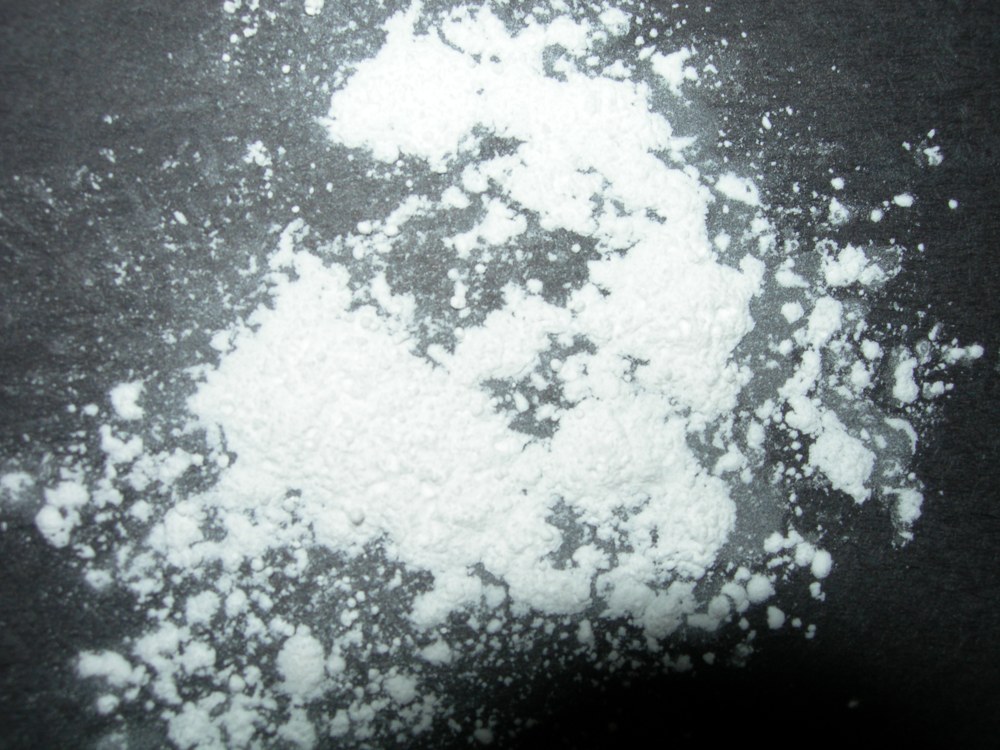
Understanding the material
Talc is a mineral material rather than a single synthetic chemical of fixed purity. Its source, associated minerals, particle distribution and processing influence suitability. Pharmaceutical enquiries should identify the required grade and include mineral-purity and asbestos-test documentation; an industrial talc description is not sufficient for pharmaceutical qualification.
Product Identity & Specifications
Chemical identity, physical characteristics and key specifications for Powder Talc.
| Parameter | Description / value | Basis / application |
|---|---|---|
| Material identity | Natural hydrated magnesium silicate | Selected and milled mineral |
| CAS number | 14807-96-6 | Talc |
| Ideal mineral formula | Mg₃Si₄O₁₀(OH)₂ | Natural associated minerals may vary |
| Appearance | White or almost white fine powder | General pharmaceutical description |
| Texture | Smooth / unctuous | Plate-like mineral particles |
| Water solubility | Practically insoluble | Disperses as particles rather than dissolving |
| Main pharmaceutical functions | Glidant, lubricant and diluent | Additional anti-adherent use depends on formulation |
| Particle size | Grade-specific distribution | State the method, micron limits or sieve requirement |
| Bulk characteristics | Bulk / tapped density as required | Relevant to dispensing and powder processing |
| Asbestos requirement | No detectable asbestos for pharmaceutical-grade talc | Review the method and test documentation |
| Mineral and chemical purity | Associated minerals, soluble matter and relevant elements | Assess against the intended standard |
| Microbiological quality | Application-specific limits | Important for a material of natural origin |
Identity and published standard
USP–NF: Talc
The published definition describes selected, powdered, natural hydrated magnesium silicate. Talc containing detectable asbestos is not pharmaceutical grade. Particle size, mineral purity and the applicable test evidence form part of grade selection.
View published monographA published standard describes the material; conformity of the offered grade is confirmed through its current specification and COA.
For further information and current COA/specification, please contact us.
Request current COA & specificationApplications & functional benefits
Tablets and capsules
Used in suitable powder formulations to assist flow or lubrication. Grade and quantity must be evaluated together with the other ingredients and manufacturing process.
Tablet and pellet coating
Selected talc grades can act as anti-adherents in coating systems. Particle distribution and dispersion quality matter when preparing a uniform coating suspension.
Industrial mineral filler
Industrial formulations may select talc for its mineral and physical characteristics. The required fineness, colour and compatibility differ from pharmaceutical purchasing requirements.
Choosing the appropriate talc grade
| Selection point | Pharmaceutical requirement | Industrial requirement |
|---|---|---|
| Quality basis | Relevant pharmacopoeia and qualified supplier documentation | End-use specification for the formulation |
| Particle size | Distribution suited to dosage-form processing | Fineness and physical performance suited to the application |
| Mineral purity | Documented identity and applicable asbestos / impurity controls | Purity and composition appropriate to the end use |
| Microbial quality | Limits matched to the intended pharmaceutical application | Requirements specified for the particular product |
Formulation & processing
Specify distribution, not only mesh
A mesh number describes a sieve designation; it does not fully characterise the powder. Where performance is sensitive, request the test method and a particle-size distribution or agreed sieve-residue limits.
Assess dispersion and process performance
For a coating or liquid dispersion, assess wetting and suspension uniformity. For a dry blend, assess flow and lubrication in the complete formula rather than inferring performance from appearance alone.
Review the mineral source
Combine the mineral identity, impurity controls and applicable asbestos-test report in supplier qualification. The absence of visible fibres or a white colour is not evidence of pharmaceutical-grade suitability.
What to check in the specification
- Mineral identity and associated minerals: confirm the required talc grade.
- Asbestos absence: request documented results using the applicable analytical method.
- Particle-size distribution and bulk density: specify test method and units.
- Relevant elemental impurities and soluble matter: assess against the applicable specification.
- Microbial quality: review the requirements and treatment history relevant to pharmaceutical use.
Current product documentation
Request a current COA, complete specification, SDS, particle-size data and applicable asbestos-test documentation. State clearly whether the enquiry is for pharmaceutical or industrial use.
Request documents for Powder TalcPacking, storage & handling
Packing and quotation details
Specify the required bag size, moisture protection and quantity for the quotation. The offered grade, manufacturer, packing and sample arrangement will be confirmed. For evaluation, request enough material to check dispersion or powder-flow behaviour in the intended process.
Storage and safe handling
Keep in well-closed containers in a dry, clean area. Minimise airborne dust during weighing, bag opening and transfer; use the extraction and personal-protection measures specified in the SDS. Protect pharmaceutical material from cross-contamination and verify package integrity on receipt.
Frequently asked questions
Does talc dissolve in water?
No. Talc is practically insoluble in water. A mixture containing talc is a dispersion or suspension, which requires suitable handling to keep particles distributed.
Can industrial talc replace pharmaceutical talc?
The grades should not be treated as interchangeable. Pharmaceutical use requires the relevant quality specification and supporting qualification evidence.
Is “asbestos-free” wording enough?
Request the applicable analytical method and documentation. A statement alone does not provide the same information as a traceable test report.
Technical information sources
Need more information?
Contact SBS for further product details, current COA, specification, packing and a quotation for your requirement.
Contact SBS for details and documents