
Understanding the material
For an adhesive manufacturer, grade selection influences dissolution, working viscosity, tack retention and bond development. Rubber intended for moulded or extruded components may not provide the same behaviour as a dedicated adhesive grade. Compare the manufacturer’s grade designation and measurement conditions before considering substitution.
Product Identity & Specifications
Chemical identity, physical characteristics and key specifications for Polychloroprene Rubber.
| Parameter | Description / value | Basis / application |
|---|---|---|
| Material identity | Polychloroprene / chloroprene rubber | Synthetic elastomer family |
| Product grade | Adhesive or other industrial grade | State the intended use |
| Supplied form | Solid rubber or latex | Different processing routes |
| Crystallisation rate | Fast, medium or slower by grade | Tack and bond-development behaviour |
| Mooney viscosity | Method-specific rubber measurement | Specify conditions and units |
| Solution viscosity | At stated concentration and solvent | Not interchangeable with Mooney viscosity |
| Solvent compatibility | Formulation-specific | Dissolution and stability |
| Resin compatibility | Selected tackifying or modifying resins | Qualify in the complete formulation |
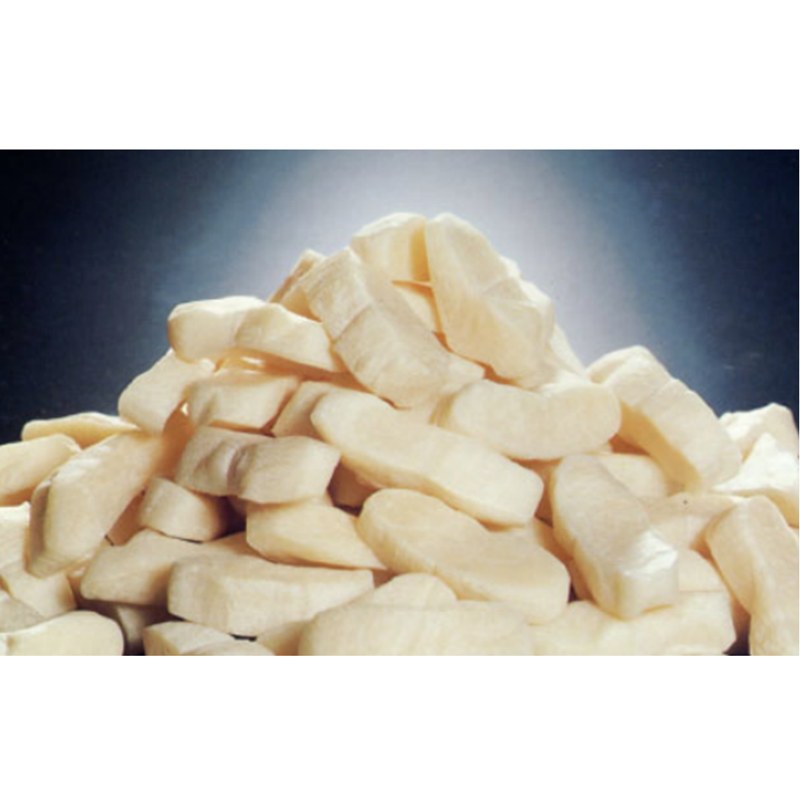
| Appearance | Chips, other solid form or latex by grade | Offered material description applies |
| Volatile matter | Grade-specific control | Storage and processing |
| Latex solids / pH | Relevant only to latex grades | Aqueous formulation requirements |
| Storage life | Manufacturer-stated conditions | Grade and packaging dependent |
Identity and published standard
Chloroprene rubber — manufacturer grade classifications
Published manufacturer grade tables distinguish adhesive, general rubber and latex products using crystallisation and viscosity characteristics. The grade designation and its test conditions are essential: solution viscosity and Mooney viscosity cannot be treated as the same measurement.
View published grade informationThe offered manufacturer’s grade specification and current quality documentation define acceptance.
For further information and current COA/specification, please contact us.
Request current COA & specificationApplications & functional benefits
Contact-adhesive manufacture
Dedicated CR adhesive grades can be formulated for compatible footwear and leather applications. Select the crystallisation and viscosity profile for the target assembly process.
Industrial bonding formulations
CR can be evaluated with suitable resins and additives for flexible bonding systems. Test adhesion and service performance on the actual substrate pair.
Other rubber processing
Non-adhesive applications need the corresponding rubber grade and compounding assessment. A general-purpose rubber should not be substituted solely because it shares the CR name.
Adhesive grades, processing grades and latex
| Grade / form | Main distinction | Selection consideration |
|---|---|---|
| Fast-crystallising adhesive grade | Different setting and bond-development profile | Match to the production and assembly window. |
| Other solid CR grade | Viscosity and crystallisation tailored to its use | Confirm adhesive suitability before substitution. |
| CR latex | Aqueous elastomer dispersion | Requires a waterborne formulation route. |
Formulation & processing
Compare equivalent viscosity data
Mooney and solution viscosity measure different material behaviour. For solution data, retain concentration, solvent and temperature alongside the value.
Evaluate resin and solvent compatibility
Test the selected elastomer with the intended formulation components. Compatibility and storage stability need assessment after mixing, not only on individual raw materials.
Set the required tack profile
Crystallisation behaviour can influence early bond development and working time. Choose a grade through application trials under the intended factory conditions.
What to check in the specification
- Adhesive grade and crystallisation rate
- Mooney or solution viscosity with stated test conditions
- Compatibility with tackifying resins and formulation solvents
- Storage stability and processing behaviour
Current product documentation
Request the current COA, specification sheet and SDS. Share any additional documentation required for your application.
Request documents for Polychloroprene RubberPacking, storage & handling
Packing and quotation details
Discuss the required net weight, sample quantity and delivery schedule with SBS. Packaging should be compatible with the material and carry product, manufacturer and batch identification. Confirm the offered pack size and shelf-life or retest information in the quotation; these depend on the selected grade.
Storage and safe handling
Keep the material in compatible, closed packaging under the manufacturer’s stated conditions. Use the current SDS to set ventilation, personal protection and fire precautions; storage and shelf life depend on formulation.
Frequently asked questions
Is polychloroprene the same as natural rubber?
No. Polychloroprene is a different synthetic elastomer with its own grade and formulation requirements.
Can solid CR and CR latex be exchanged directly?
No. Their carrier systems and processing routes differ.
Which information is needed for an equivalent grade?
Provide the existing grade, viscosity test conditions, crystallisation requirement, formulation route and intended use.
Technical information sources
Need more information?
Contact SBS for further product details, current COA, specification, packing and a quotation for your requirement.
Contact SBS for details and documents