
Understanding the material
The product name identifies the main chemical but does not define every commercial grade. A stabilised industrial solvent may differ from a specialised analytical material. The intended application determines acceptable impurities and packaging. DCM’s high volatility requires suitable closed handling and ventilation; absence of a strong perceived odour does not establish safe exposure.
Product Identity & Specifications
Chemical identity, physical characteristics and key specifications for Methylene Chloride.
| Parameter | Description / value | Basis / application |
|---|---|---|
| Chemical identity | Dichloromethane / methylene chloride | Chlorinated solvent |
| CAS number | 75-09-2 | Chemical identifier |
| Formula | CH₂Cl₂ | Single main solvent component |
| Molar mass | 84.93 g/mol | Formula mass |
| Appearance | Colourless volatile liquid | General description |
| Purity | Offered grade specification | No universal commercial assay claimed |
| Water content | Specified analytical limit | Process compatibility |
| Acidity | Method-defined result | Quality and stability review |
| Non-volatile residue | Selected maximum | Evaporation residue assessment |
| Stabiliser | Identity and concentration where present | Confirm application compatibility |
| Packaging | Compatible sealed solvent container | Current manufacturer instructions |
| Exposure control | Engineering controls and SDS-based precautions | Inhalation and skin-contact hazards |
Identity and published standard
Dichloromethane identity and grade specification
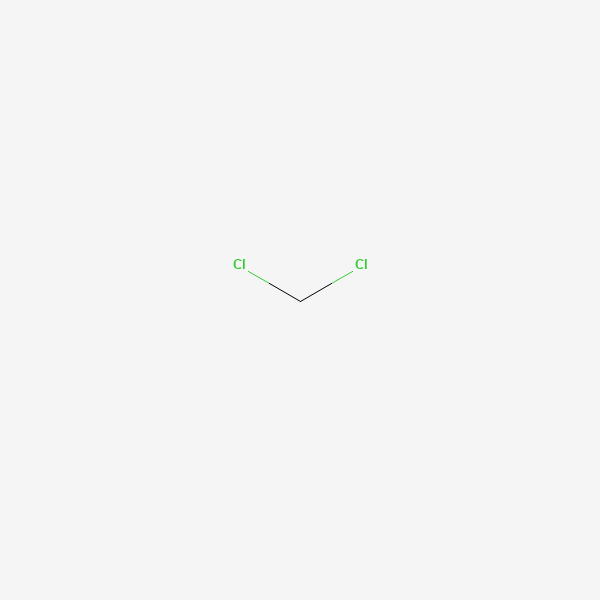
NIOSH identifies methylene chloride as dichloromethane, CAS 75-09-2, formula CH₂Cl₂. This identity and hazard information is not a commercial purity standard. The selected manufacturer’s specification defines assay, water, acidity, residue and stabiliser requirements.
View published chemical informationChemical identity does not establish suitability for a particular process; review the current specification and SDS.
For further information and current COA/specification, please contact us.
Request current COA & specificationApplications & functional benefits
Industrial solvent processing
Evaluate the selected grade only in a suitable controlled process. Specify the materials contacted and the impurity limits needed by the application.
Formulation development
Where DCM is being considered as a process solvent, assess compatibility and any required removal or residue control. Follow the applicable product and workplace requirements.
Grade comparison
A clear specification supports comparison of industrial and specialised grades. Stabiliser content and non-volatile residue can be relevant differentiators.
Selecting the required solvent grade
| Grade / form | Main distinction | Selection consideration |
|---|---|---|
| Industrial solvent grade | Defined purity and impurity limits | Match to the actual process specification. |
| Stabilised grade | Includes a declared stabiliser system | Assess compatibility and downstream residues. |
| Special-purpose grade | Additional analytical or process requirements | Request the exact named grade and evidence. |
Formulation & processing
Plan controlled transfer
Use compatible closed equipment and engineered ventilation appropriate to the process. Review the current SDS before handling and do not rely on odour as an exposure indicator.
Check stabiliser compatibility
Identify any stabiliser in the offered material. Its presence may matter to sensitive reactions, residues or downstream product requirements.
Assess recovery and waste handling
Define the process for spent solvent, contaminated containers and waste streams. Avoid uncontrolled evaporation or discharge and follow the applicable site procedures.
What to check in the specification
- Identity and solvent purity
- Water content, acidity and non-volatile residue
- Stabiliser system if present
- Packaging compatibility and safe process handling
Current product documentation
Request the current COA, specification sheet and SDS. Share any additional documentation required for your application.
Request documents for Methylene ChloridePacking, storage & handling
Packing and quotation details
Discuss the required net weight, sample quantity and delivery schedule with SBS. Packaging should be compatible with the material and carry product, manufacturer and batch identification. Confirm the offered pack size and shelf-life or retest information in the quotation; these depend on the selected grade.
Storage and safe handling
Volatile solvent with serious inhalation hazards. Use engineered exposure controls and suitable protective equipment selected from the SDS; prevent skin and eye contact. Assess applicable restrictions before use.
Frequently asked questions
Are DCM and methylene chloride the same chemical?
Yes. DCM is a common abbreviation for dichloromethane, also called methylene chloride.
Is purity the only grade-selection factor?
No. Water, acidity, residue, stabiliser and application-specific impurities also matter.
What should I request before ordering?
Ask for the current COA, SDS, full specification, stabiliser details, compatible packing and offered shelf-life information.
Technical information sources
Need more information?
Contact SBS for further product details, current COA, specification, packing and a quotation for your requirement.
Contact SBS for details and documents