
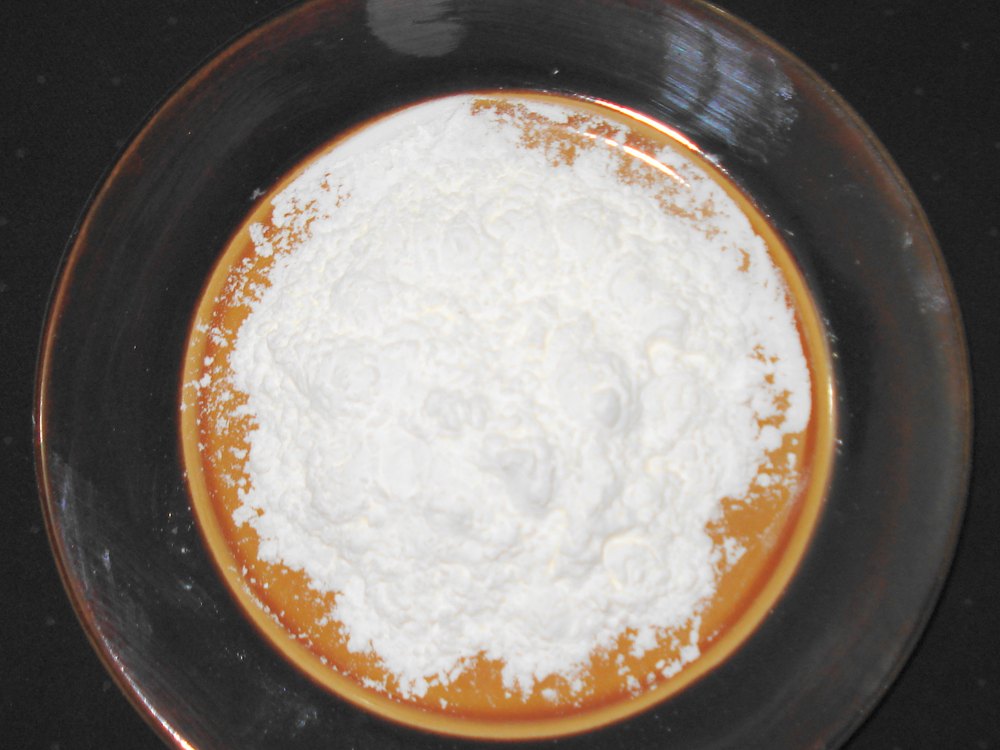
Understanding the material
Botanical identity is only the starting point for material selection. Moisture, microbial quality, particle behaviour and the way the starch is incorporated influence its usefulness in a formulation. A grade chosen for a cooked binder paste may behave differently from one selected for dry addition. Match the material to the granulation, blending or capsule-filling process.
Product Identity & Specifications
Chemical identity, physical characteristics and key specifications for Maize Starch.
| Parameter | Description / value | Basis / application |
|---|---|---|
| Product identity | Maize starch / corn starch | Native grade unless otherwise specified |
| Botanical source | Zea mays | Mature maize grain |
| Material family | Polysaccharide granules | Naturally derived excipient |
| Appearance | Fine white to off-white powder | Grade description applies |
| Chemical representation | (C₆H₁₀O₅)n | Polymer; no single molecular weight |
| Cold-water behaviour | Native granules do not form a true cold-water solution | Differs from pregelatinised grades |
| Binder preparation | Starch paste after suitable processing | Process-dependent function |
| Moisture | Specification-controlled | Flow and storage performance |
| pH | Measured in a defined preparation | Method and concentration matter |
| Particle behaviour | Granule distribution and agglomeration | Blending and dispersion |
| Microbial quality | Limits matched to intended application | Current quality documentation |
| Grade identity | Native, pregelatinised or modified | State explicitly in the enquiry |
Identity and published standard
USP–NF: Corn Starch
The published definition identifies starch granules separated from mature corn (Zea mays) grain. The chosen pharmaceutical grade requires a complete specification and current quality results.
View published monographA published standard describes the material; conformity of the offered grade is confirmed through its current specification and COA.
For further information and current COA/specification, please contact us.
Request current COA & specificationApplications & functional benefits
Tablet disintegration
Native maize starch is used in suitable tablet formulations to support breakup after administration. Performance depends on the formulation and whether the starch is added within or outside granules.
Filling and blending
It can contribute bulk in selected tablet or capsule mixtures. Assess flow and uniformity with the active ingredient and other excipients rather than relying on the starch name alone.
Binder preparation
Appropriately processed starch pastes can bind granules. Paste preparation and addition conditions should be established for the manufacturing process.
Native starch and modified processing grades
| Grade / form | Main distinction | Selection consideration |
|---|---|---|
| Native maize starch | Granules retain their native structure | Evaluate as filler, disintegrant or processed binder. |
| Pregelatinised starch | Physically processed to alter hydration behaviour | Review cold-water functionality and compression properties. |
| Chemically modified starch | Functional properties changed by modification | Use the specific excipient identity and specification. |
Formulation & processing
Select the addition stage
For a disintegrant role, evaluate the effect of adding starch during granulation versus after drying. The finished-tablet test establishes the result in the actual formulation.
Control paste preparation
For binder use, define the preparation method and consistency needed by the process. Avoid assuming native starch will behave like a cold-water-soluble binder.
Protect hygienic quality
Use clean equipment for aqueous preparations and manage holding time. Raw-material microbial limits do not replace control of the prepared wet system.
What to check in the specification
- Botanical identity and native versus modified grade
- Moisture, pH and particle behaviour
- Microbial quality and relevant impurities
- Performance in the intended granulation or compression process
Current product documentation
Request the current COA, specification sheet and SDS. Share any additional documentation required for your application.
Request documents for Maize StarchPacking, storage & handling
Packing and quotation details
Discuss the required net weight, sample quantity and delivery schedule with SBS. Packaging should be compatible with the material and carry product, manufacturer and batch identification. Confirm the offered pack size and shelf-life or retest information in the quotation; these depend on the selected grade.
Storage and safe handling
Keep containers closed and protected from contamination. Follow the offered manufacturer’s labelled storage conditions and retest date; use its SDS for handling controls.
Frequently asked questions
Are maize starch and corn starch the same name?
Yes, both describe starch obtained from maize. The grade and any processing or modification must still be identified.
Can native starch replace pregelatinised starch?
They have different hydration and processing properties. Substitution requires formulation evaluation.
What should I specify for a quotation?
State native or modified grade, intended function, applicable pharmacopoeia, quantity and any particle or microbial requirements.
Technical information sources
Need more information?
Contact SBS for further product details, current COA, specification, packing and a quotation for your requirement.
Contact SBS for details and documents