
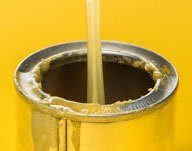
Understanding the material
For these adhesives, tack retention, workability and heat performance should be assessed together. A longer assembly window can be useful for manual operations, while a faster line may need a different drying and activation profile. The term grafted identifies a modification approach rather than a single universal composition or specification.
Product Identity & Specifications
Chemical identity, physical characteristics and key specifications for Grafted Adhesive.
| Parameter | Description / value | Basis / application |
|---|---|---|
| Material identity | Graft-modified rubber adhesive | Formulated product, not a single pure chemical |
| Supplied presentation | Prepared adhesive liquid | Identify the exact grade |
| Polymer / carrier | Declared in product documentation | Compatibility and handling |
| Solids content | Non-volatile fraction, % | Method and test conditions required |
| Viscosity | Specified flow or rotational measurement | Temperature, instrument and speed matter |
| Density | Mass per unit volume | State the measurement temperature |
| Substrate compatibility | Actual material pair | Include surface finish and treatment |
| Application method | Brush, roller or spray as qualified | Grade-specific equipment suitability |
| Open / assembly time | Specified working window | Film thickness and ambient conditions matter |
| Drying / activation | TDS-defined conditions | Do not transfer settings between grades |
| Bond performance | Initial and conditioned strength | Agreed test method and failure mode |
| Shelf life / packing | Current manufacturer information | Closed original packaging |
Identity and published standard
Adhesive specification and ASTM D903 bond testing
Prepared adhesives are formulation-specific mixtures. ASTM D903 provides a published method for comparing peel or stripping strength under defined test conditions; it does not set one universal pass value for every adhesive. Agree the substrate pair, conditioning and acceptance requirement for the selected grade.
View published test-method scopeThe current TDS, agreed test conditions and product quality documentation define the offered adhesive.
For further information and current COA/specification, please contact us.
Request current COA & specificationApplications & functional benefits
Upper and lining assembly
Appropriate formulations can be evaluated for footwear upper and lining materials. Include coatings, backing fabrics and any plasticiser exposure in substrate trials.
Heel covering and component work
Selected grades support shaped and flexible assemblies. Test adhesion after the actual forming and pressing sequence, not only on flat laboratory strips.
Leather-goods bonding
Evaluate for compatible leather, textile and synthetic components. The desired open time and finished appearance should be included in grade selection.
Choosing the appropriate bonding system
| Grade / form | Main distinction | Selection consideration |
|---|---|---|
| Grafted rubber formulation | Modified polymer chemistry | Review the exact base polymer and application recommendations. |
| Conventional contact adhesive | Different polymer and tack profile | Compare processing and aged bond performance. |
| PU adhesive system | Different resin chemistry and activation behaviour | Assess separately for the target substrate pair. |
Formulation & processing
Define the assembly window
Record the time between application, drying and joining. Match tack retention to the real production cycle and ambient conditions.
Control activation and pressing
Follow the selected TDS for any thermal activation and pressing stage. Overheating or joining outside the prescribed window can alter bond quality.
Validate treated surfaces
Finishes, release agents and plasticisers can change adhesion. Use production-grade substrate samples and evaluate performance after relevant conditioning.
What to check in the specification
- Base rubber and graft chemistry
- Substrate preparation and primer requirements
- Solids, viscosity and workable open time
- Peel performance and heat/ageing resistance
Current product documentation
Request the current TDS, SDS, specification and available batch COA or quality certificate. Include both substrate materials, surface preparation, application equipment and service conditions so the offered grade can be assessed.
Request documents for Grafted AdhesivePacking, storage & handling
Packing and quotation details
Discuss the required net weight, sample quantity and delivery schedule with SBS. Packaging should be compatible with the material and carry product, manufacturer and batch identification. Confirm the offered pack size and shelf-life or retest information in the quotation; these depend on the selected grade.
Storage and safe handling
Keep the material in compatible, closed packaging under the manufacturer’s stated conditions. Use the current SDS to set ventilation, personal protection and fire precautions; storage and shelf life depend on formulation.
Frequently asked questions
What does grafted mean here?
It describes a polymer-modification approach. The supplier specification identifies the actual rubber base and formulation.
Does every grafted adhesive use the same drying schedule?
No. Solvent blend, solids, film thickness and activation requirements vary by grade.
What information is needed for a sample?
Provide both substrates, the assembly sequence, desired tack time and any heat or ageing requirement.
Technical information sources
Need more information?
Contact SBS for further product details, current COA, specification, packing and a quotation for your requirement.
Contact SBS for details and documents