
Understanding the material
A calcium-carbonate purchasing decision should bring together chemical purity and physical performance. For a nutritional formulation, calcium contribution is relevant; for filling or tableting, particle behaviour and compressibility also matter. A fine industrial filler is not automatically equivalent to a pharmaceutical grade, even when the chemical formula is the same.
Product Identity & Specifications
Chemical identity, physical characteristics and key specifications for Calcium Carbonate.
| Parameter | Description / value | Basis / application |
|---|---|---|
| Product identity | Calcium carbonate | Inorganic mineral salt |
| CAS number | 471-34-1 | Chemical identity |
| Molecular formula | CaCO₃ | Calcium carbonate |
| Molar mass | 100.09 g/mol | Formula mass |
| Published assay | 98.0–100.5% | USP specified dried basis |
| Theoretical calcium fraction | Approximately 40% by mass | Pure CaCO₃, not a batch assay |
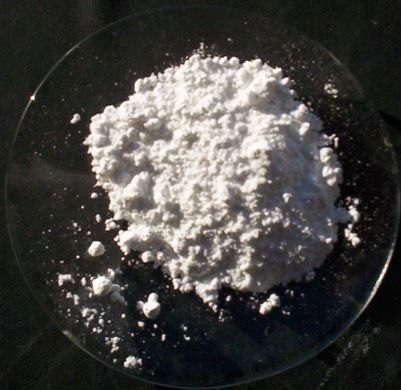
| Appearance | White mineral powder | Particle grade varies |
| Production type | Ground or precipitated | Different physical characteristics |
| Water behaviour | Low water solubility | Dispersion rather than simple dissolution |
| Particle distribution | Agreed size distribution and method | Texture, dispersion and processing |
| Bulk density | Grade-specific | Handling and filling volume |
| Impurity controls | Elemental impurities and acid-insoluble matter | Application-specific specification |
Identity and published standard
USP–NF: Calcium Carbonate
The USP published definition specifies 98.0–100.5% calcium carbonate after drying at 200°C for four hours. This analytical preparation defines the assay basis; it is not a storage instruction.
View published monographA published standard describes the material; conformity of the offered grade is confirmed through its current specification and COA.
For further information and current COA/specification, please contact us.
Request current COA & specificationApplications & functional benefits
Pharmaceutical formulations
Qualified grades are used in calcium-containing and other suitable dosage forms. Choose chemical purity and physical characteristics for the approved formulation.
Nutrition products
Calcium contribution can be considered in tablets, powders and related products. The finished formulation and applicable product requirements determine the appropriate grade.
Functional filling
Selected grades serve as mineral fillers. Particle shape, fineness and surface characteristics should match the intended matrix and process.
Ground, precipitated and application-specific grades
| Grade / form | Main distinction | Selection consideration |
|---|---|---|
| Ground calcium carbonate | Mechanically processed mineral | Assess mineral purity and particle distribution. |
| Precipitated calcium carbonate | Produced through precipitation | Evaluate morphology, density and dispersion. |
| Pharmaceutical / nutritional grade | Defined quality and documentation requirements | Confirm conformity independently of production type. |
Formulation & processing
Define the particle requirement
Specify distribution and test method, not only a mesh number. Changes in fineness can affect dust, flow and mixing performance.
Account for calcium content
Theoretical calcium content is derived from the chemical formula. Use the current assay and approved calculation for manufacturing and labelling decisions.
Evaluate formulation interactions
Calcium carbonate reacts with acids and is poorly soluble in water. Check its role in the intended pH environment and assess compatibility with the complete formulation.
What to check in the specification
- Identity and assay on the stated basis
- Particle-size distribution and bulk density
- Elemental impurities and acid-insoluble matter
- Microbial quality where required
Current product documentation
Request the current COA, specification sheet and SDS. Share any additional documentation required for your application.
Request documents for Calcium CarbonatePacking, storage & handling
Packing and quotation details
Discuss the required net weight, sample quantity and delivery schedule with SBS. Packaging should be compatible with the material and carry product, manufacturer and batch identification. Confirm the offered pack size and shelf-life or retest information in the quotation; these depend on the selected grade.
Storage and safe handling
Keep containers closed and protected from contamination. Follow the offered manufacturer’s labelled storage conditions and retest date; use its SDS for handling controls.
Frequently asked questions
Are ground and precipitated grades interchangeable?
They may have the same chemical identity but different physical properties. Substitution should be qualified in the actual process.
Does 99% assay mean 99% calcium?
No. Assay describes calcium carbonate content; pure calcium carbonate contains approximately 40% elemental calcium by mass.
What quality documents should be requested?
Request current COA, specification, SDS, particle distribution and the impurity or microbial evidence relevant to the application.
Technical information sources
Need more information?
Contact SBS for further product details, current COA, specification, packing and a quotation for your requirement.
Contact SBS for details and documents