
Understanding the material
The product contains crystal water as part of its chemical form. Its weighed mass therefore differs from the equivalent mass of anhydrous azithromycin. For procurement and development, the useful specification brings together chemical identity, assay basis, water, related substances and physical properties. A high assay alone does not describe the complete quality of an API.
Product Identity & Specifications
Chemical identity, physical characteristics and key specifications for Azithromycin Dihydrate.
| Parameter | Description / value | Basis / application |
|---|---|---|
| Product identity | Azithromycin dihydrate | Two-water form of azithromycin |
| Chemical family | Macrolide antibacterial API | For pharmaceutical manufacturing |
| CAS number | 117772-70-0 | Dihydrate identity |
| Molecular formula | C₃₈H₇₂N₂O₁₂·2H₂O | Includes two water molecules |
| Molecular weight | 785.02 g/mol | Dihydrate |
| Anhydrous molecular weight | Approximately 749.00 g/mol | Azithromycin active moiety |
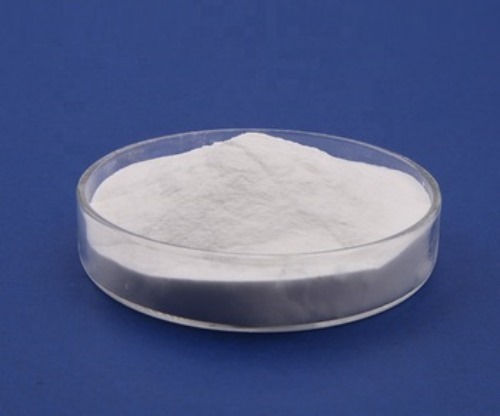
| Appearance | White crystalline powder | General material description |
| Assay definition | 945–1030 µg/mg | USP published definition; anhydrous basis |
| Water / hydrate state | Dihydrate; batch water result on COA | Review alongside the assay basis |
| Particle distribution | Specify D10, D50, D90 or agreed sieve limits | Choose for the intended formulation |
| Related substances | Individual and total impurities | Acceptance criteria follow the selected specification |
| Residual solvents | Route-specific solvent profile | Review the current API documentation |
Identity and published standard
USP–NF: Azithromycin
Azithromycin may be anhydrous, monohydrate or dihydrate. The published definition specifies 945–1030 µg/mg of azithromycin, calculated on the anhydrous basis. This product page identifies the dihydrate form.
View published monographA published standard describes the material; conformity of the offered grade is confirmed through its current specification and COA.
For further information and current COA/specification, please contact us.
Request current COA & specificationApplications & functional benefits
Tablet manufacturing
Used as the active ingredient in oral tablets. API particle distribution, blend behaviour and potency correction are relevant to development and scale-up. Finished-tablet dissolution and content uniformity are evaluated in the complete formulation.
Powder for oral suspension
Used in dry formulations intended for reconstitution. Development includes dispersion, redispersibility, dose uniformity and compatibility with the selected suspending and flavouring system.
Formulation and supplier qualification
Suitable enquiries include development samples and commercial manufacturing requirements. Provide the target dosage form and applicable standard so the API specification can be assessed against the intended process.
Dihydrate, monohydrate and anhydrous azithromycin
| Form | Chemical difference | Procurement implication |
|---|---|---|
| Dihydrate | Two molecules of crystal water; 785.02 g/mol | Specify the dihydrate in the purchase description. |
| Monohydrate | One molecule of crystal water; approximately 767.00 g/mol | A different hydration form requiring a separate material assessment. |
| Anhydrous | No stoichiometric crystal water; approximately 749.00 g/mol | Not a one-for-one mass substitution for the dihydrate. |
Formulation & processing
Read potency and water together
Confirm whether potency is expressed on an anhydrous, dried or as-is basis. Avoid applying a second moisture correction when it is already included in the reported result. The approved manufacturing calculation should use the current batch COA.
Match physical properties to the process
Agree the particle-size method and distribution, rather than using an undefined term such as fine powder. Where needed, include bulk density and flow information in the technical review.
Qualify the complete API
Review identity, impurity profile, manufacturing source and stability information together. Changes in source or grade should be assessed against the established process and finished-product specification.
What to check in the specification
- Identity and crystalline/hydrate form: establish that the material is the required dihydrate grade.
- Assay: read the units, method and anhydrous or as-is basis together with the water result.
- Related substances: review specified, unspecified and total impurities against the agreed specification.
- Residual solvents and elemental-impurity assessment: match the manufacturing route and intended use.
- Particle-size distribution and bulk characteristics: evaluate against the buyer’s processing requirements.
Current product documentation
For current material, request the batch COA, full API specification, SDS and retest/stability information. Manufacturer qualification and applicable regulatory-support documents can be reviewed according to your market and formulation requirements.
Request documents for Azithromycin DihydratePacking, storage & handling
Packing and quotation details
Request the required net weight and suitable sealed inner and outer packaging with your quotation. Batch identification, manufacturer details and retest information should accompany the offered material. Packing format, sample availability and lead time are agreed for each enquiry.
Storage and safe handling
Store in the original closed container under the manufacturer’s specified conditions. Protect from contamination during dispensing and use suitable controls for API dust. Follow the current SDS and retest date; finished-medicine storage instructions should not be substituted for raw-API instructions.
Frequently asked questions
Is the dihydrate the same as anhydrous azithromycin?
The active moiety is azithromycin, but the hydration state and formula weight differ. Specify the required form and calculate the input using the approved assay basis.
Does the published assay range describe a supplied batch?
It describes a published compendial definition. The current batch COA provides its measured assay, water and other quality results.
What should I send for a technical quotation?
Send the intended dosage form, required pharmacopoeia or in-house specification, particle-size requirement, quantity and delivery location. Include any manufacturer or regulatory-document requirements.
Technical information sources
Need more information?
Contact SBS for further product details, current COA, specification, packing and a quotation for your requirement.
Contact SBS for details and documents