
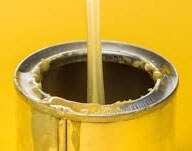
Understanding the material
A useful adhesive specification describes the bond-making process as well as the liquid in the container. Viscosity and solids affect application, while drying time, assembly window and pressure affect bond formation. Initial handling strength and long-term bond performance are different requirements. Select and trial a grade using the actual production materials, including their surface finish.
Product Identity & Specifications
Chemical identity, physical characteristics and key specifications for Adhesive.
| Parameter | Description / value | Basis / application |
|---|---|---|
| Material identity | Prepared industrial adhesive | Formulated product, not a single pure chemical |
| Supplied presentation | Liquid, dispersion or other selected presentation | Identify the exact grade |
| Polymer / carrier | Declared in product documentation | Compatibility and handling |
| Solids content | Non-volatile fraction, % | Method and test conditions required |
| Viscosity | Specified flow or rotational measurement | Temperature, instrument and speed matter |
| Density | Mass per unit volume | State the measurement temperature |
| Substrate compatibility | Actual material pair | Include surface finish and treatment |
| Application method | Brush, roller or spray as qualified | Grade-specific equipment suitability |
| Open / assembly time | Specified working window | Film thickness and ambient conditions matter |
| Drying / activation | TDS-defined conditions | Do not transfer settings between grades |
| Bond performance | Initial and conditioned strength | Agreed test method and failure mode |
| Shelf life / packing | Current manufacturer information | Closed original packaging |
Identity and published standard
Adhesive specification and ASTM D903 bond testing
Prepared adhesives are formulation-specific mixtures. ASTM D903 provides a published method for comparing peel or stripping strength under defined test conditions; it does not set one universal pass value for every adhesive. Agree the substrate pair, conditioning and acceptance requirement for the selected grade.
View published test-method scopeThe current TDS, agreed test conditions and product quality documentation define the offered adhesive.
For further information and current COA/specification, please contact us.
Request current COA & specificationApplications & functional benefits
Footwear assembly
Select the adhesive for the exact upper and sole materials, their surface treatment and the factory’s drying or activation equipment. A single adhesive does not cover every substrate combination.
Leather-goods manufacture
Suitable formulations can be evaluated for laminating, lining and component assembly. Include flexibility, appearance and resistance to the intended service conditions in the requirement.
Industrial bonding
Specify the two surfaces, joint geometry, load and environment. A sample trial should reproduce the actual assembly sequence and service expectations.
Choosing the appropriate bonding system
| Grade / form | Main distinction | Selection consideration |
|---|---|---|
| Contact adhesive | Bonding after the prescribed drying stage | Match open time and assembly pressure to the line. |
| Polyurethane adhesive | PU-based bonding formulation | Assess activation, hardener and substrate requirements. |
| Waterborne system | Water is the principal carrier | Drying equipment and substrate absorbency affect selection. |
Formulation & processing
Prepare the actual surfaces
Control contamination, roughening and any primer treatment required by the selected grade. A successful trial on unfinished material may not represent a coated or treated production surface.
Match application to the line
Specify brush, roller or spray equipment and the coating requirement. Confirm viscosity at the stated temperature and follow the TDS for thinning, drying and assembly.
Evaluate the complete bond
Measure initial and conditioned performance using an agreed method. Record the substrate failure mode and exposure conditions along with the strength result.
What to check in the specification
- Substrate compatibility and surface preparation
- Viscosity, solids and application method
- Open time, drying or cure schedule
- Initial and aged bond performance
Current product documentation
Request the current TDS, SDS, specification and available batch COA or quality certificate. Include both substrate materials, surface preparation, application equipment and service conditions so the offered grade can be assessed.
Request documents for AdhesivePacking, storage & handling
Packing and quotation details
Discuss the required net weight, sample quantity and delivery schedule with SBS. Packaging should be compatible with the material and carry product, manufacturer and batch identification. Confirm the offered pack size and shelf-life or retest information in the quotation; these depend on the selected grade.
Storage and safe handling
Keep the material in compatible, closed packaging under the manufacturer’s stated conditions. Use the current SDS to set ventilation, personal protection and fire precautions; storage and shelf life depend on formulation.
Frequently asked questions
Can one adhesive bond every footwear material?
No. Rubber, leather, textiles and synthetic soles can need different preparation and adhesive systems.
Is a higher viscosity always stronger?
No. Viscosity mainly describes application behaviour under stated test conditions; strength depends on the complete bonding system.
How can SBS select a suitable grade?
Provide the substrate pair, application method, line conditions and desired performance, together with quantity and delivery location.
Technical information sources
Need more information?
Contact SBS for further product details, current COA, specification, packing and a quotation for your requirement.
Contact SBS for details and documents